Twelve dollars. That is all it requires to have an afternoon to talk about many years later. No booking at a resort or a passport or a complex program. Nothing but a putt putt places near me, a ball, and somebody to bother.
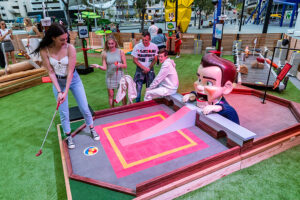
Putt putt is a game with this image as the game of children. That reputation is wrong. Adults are no less competitive -and occasionally, conspicuously so. Something about that little ball that will not drop causes some very personal feeling in even the most mature humans. The course is turned into a battlefield. Friendships are tested. Scores get disputed. It’s wonderful.

In fact, to find a good course, one needs to do some research. A search of putt putt near me results in a long list being displayed almost immediately, yet the first in a list is not necessarily the best. Read reviews as opposed to being obsessed with star ratings. Individuals that state whether the barriers are operating effectively, how slender the grass is below foot, or whether employees are mindful – those critics are worth believing. The 4.2 rating with 900 reviews obliterates a 5.0 by eight happy strangers.

An action that most people avoid at all times: pick up the phone. A phone call is enough to know whether walk-in is possible, the duration of waits in the afternoon of a Saturday, and the option of group pricing. Two hours of standing about in frustration is equal to two minutes of talk.

All courses do not appear the same on the outside. Others are embedded within huge entertainment facilities – go-karts buzzing along, the sound of the arcades pouring out, battle cages in the rear. Others are independent locations, quiet next door to laundromats and sandwich shops, and have been doing the same charming menu since the early nineties. Spots that are independent have an added value. History, maybe. Or simply excellent old time appeal that cannot be copied by a franchise store.

Black light evening rounds are different. Radiant balls, painted barriers which appear to breathe in UV light, a certain kind of anarchy that is never quite generated in the daytime courses. At least worth trying once particularly when out on a date or during a birthday.

Younger kids on the trip? Search narrowly in the case of shorter layouts. There is a reason why there are nine holes. Eighteen holes is a test of adult patience–with a five-year-old on the trail, it is beginning to seem a little eternity since hole twelve.

You will be occasionally deceived by weather. Outdoor courses are normally closed during heavy rain, though the light overcast days are genuinely the ideal conditions to play. Grey air, vacant course, zero sunburn. Hidden gem situation.

Pick up a club. Swing with intention. The rest handles itself.
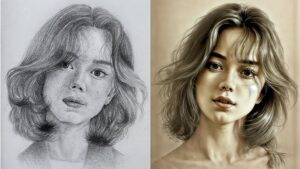
Everything is captured in the photographs. Drawing portrays what is important. That difference is philosophical, but it carries practical significance, a sketch begins to remove the visual noise and makes one focus on structure, expression, and form. Image-to-sketch converters on the internet have enabled people to do such a distillation process with just a browser and a good photo. Read more here: https://imgedit.ai/blog/ai-and-online-hand-drawn-photo-sketch-converter-dreams/

This technology is based on contrast and edge data and reads your image. In the places where light and shadow intersect, where one thing stops and the other one is initiated–they make lines. The algorithm is not an artist, but it recreates the process of decision-making very effectively to generate the results, which, in fact, surprises people.

This is not the case with all of the tools.

Other converters have one processing pass, and they consider it finished. Those are better allowing to change the line sensitivity, stroke weight, and shading density. Such a control gap is crucial depending on what you are going to use. A sketch to use as reference to a tattoo must have clean, confident lines. A portrait conversion as a warm personal gift is better with softer and more atmospheric strokes. The same image, totally different needs.

This is the point at which individuals always fail: they post a low-contrast image and then criticize the tool to a poor output. The algorithm is only able to do what it gets. A two-dimensional, well-illuminated picture leaves it practically without something to read. The converter is merely throwing his hands up and coming up with something to forget. Take or choose a photo with a high directional light, an area that has a distinct subject and there is minimal clutter on the background. That preparation is more work than any environment in the tool itself.

Portrait conversions have the best performance on most platforms. There is structural logic in faces, a lot of bone-created edges, proportions, focal points. A face is read more easily than a forest full of trees or a stack of clothes is read. Take a portrait through it first, in case you are trying a new converter. The outcome of that is more informative than any demo picture on their home page of what the tool can actually do.

There has been an increase in variety of style. Pencil drawing, inkwork, charcoal, even crosshatching in aped illustration; the possibilities now range over truly disparate aesthetic space. Crosshatch rendering, e.g., introduces portraits with an almost antique editorial feel to them. Intimate and personal are soft pencil styles. It is not overthinking to make an intentionally selected choice between them. It is a distinction between something you portray and something you overlook.

Online sketch converters are generous with their reward of users who come with good source material and clear creative intent. The instruments have won their rights. The rest is up to you.

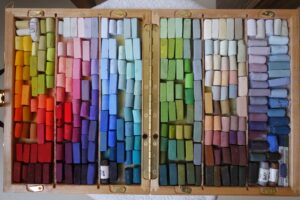
The pastels are reputed to be easy to use. No hard, no brushes, no water, soft, colorful. Sounds simple, right? Take one and the next thing you know is that you are already elbow deep in magenta dust, looking at a smear of a disaster, wondering what each action that brought you to this point was. Welcome. You’re in the right place. No better way out of that confusion is a basic pastel painting course. You see why your colors are all silted before that error is solidiified by habit. Early reviews such as those transform the whole thing.

Most people begin with soft pastels, and it is understandable. They intermix so easily, it is almost as though one is dragging colored velvet. The issue that no one brings up initially? Paper. Sketchbook paper every now and then has pastels sliding right away with no grip. You need texture. Sanded paper, pastel boards, coarse watercolor sheets, take any of them and the difference is so instant and nearly shocking.

The beginners are always put to the test by layering trips. The Lights before darks are intuitive. It is totally counterintuitive as well. Dark tones should be put down first, lights built up. Flip it round and your painting drives away as it has a score to settle with you. This is the focus of any course that is worth your time in the initial couple of lessons.

The combination of pastels is a universe on its own. Learn no more about blending paint in a palette. In this case blending is done at the surface itself – fingertips to make soft transitions, a tortillon to make accurate edges, strokes to be laid over to create a textured depth. Three various ways, three entirely different results. The course is organized in such a way that it takes you through each of them to make sure that you are not simply guessing and hoping.

Fixative spray is not as bad as it is being treated. The majority of novices resort to it when they are at the end. Wrong move. Spray in between layers. Any slight slip and even a meticulous painting becomes a smearred mess when one steps over it.

The choice of the subjects is more important than individuals think. Still life and landscapes are in their time, patient teachers, bulky forms, unmistakable shadows, give way to inaccuracy. One book, one piece of fruit, a ceramic mug. These develop your knowledge of light and value without turning them into the pop quiz.

This is what happens with pastels, they are rewarding to the individuals who cease to fight with the dust and lean into it. Filthy fingers, dirty knuckles, a partially pink nose at the end of one of the sessions. That’s not failure. That is how things are expected to work.

Everything can be captured by a camera. Every wrinkle. Every glare. All the miscellaneous objects straying through the background. That honesty is cruel sometimes. Then the picture to sketch AI intervenes and alters the tone.

You upload a photo. Click once. Wait a heartbeat. Here comes something that is written by hand, it seems like a pencil marked your world with deliberate silence.

The enchanted one is translation.

Thousands of sketches are studied by such systems. Quick line studies. Deeply shaded portraits. Grotesque first drafts brimming with nervousness. They get to know how artists suggest the presence of depth without stating it. They also note the way of constructing shadow using soft hatching rather than using heavy blocks. Then they reconstruct your picture with such clues.

The result feels lighter.

A crowded street is transformed to a textured shadow and lines. A portrait drifts off clinical to expressive outline. A simple cup of coffee can even sound poetic when it is reduced to graphite lines.

People love that shift. It feels intimate. A drawing proposes a mood and not facts. It gives one room to imagine. Photos shout. Sketches murmur.

Speed fuels curiosity.

Classical drawing is time consuming. You sit. You measure. You erase. AI reduces the time of that process to a couple of seconds. Experimentation is promoted by that speed. Turn the contrast to the maximum and you have dramatic outlines. then reduce it and you have a drawing, a drawing nearly ghostly. Some of them look like pages of an ancient notebook. Others appear as concept art of one of the films.

Naturally, not all output should be applauded. In some cases the tool magnifies edges to an extent of faces appearing to be hewn out of stone. Sometimes hands become puzzles which are abstract. You laugh. Adjust. Try again. It’s low-risk exploration.

Control still rests with you. You choose the style. You determine the degree of its rawness or refinedness. Crop tighter. Remove clutter. Dial back the intensity. The AI provides alternatives; you are a ship owner.

It has a psychological comfort as well.

Drawings even rude lines. They soften skin. They distort small flaws. The photo is less surveillance and more of an interpretation. That is the version that is preferred by many people. It is heartfelt and not artificial.

Photo to sketch AI reduces the risk of barrier to artistic expression. Formal training is not a requirement. You must have an inquisitiveness and a good snapshot. That’s it.

Pixels move literally and rigidly. They are out stomping and communicative. In some transition of that there that technology changes its coldness with a glow–and your common snapshot is to feel a little throb.

Old photographs do not enter old age well. They crack. They fade into muddy shades. The faces become so blurred as to become ghosts in paper fog. You have the print and you think, there is a story… I simply cannot see it now clearly anymore. The automatic old photo restoration AI occur near-instantly.

You scan the image. Upload it. Wait a few seconds. Then the scratches grow smaller, contrast grows and missing pieces come back motionlessly. It is not as much editing as it is time travelling with a keyboard.

I once reprinted a childhood photograph that was folded in half a million times and it appeared like a road map. The wrinkle went right through smiling. The fold became soft and the smile came back once the fold was processed. I looked longer upon it than I had thought. It hurts you right in the chest, funny, about the pixels.

The technology operates through studying trends. It has been taught what skin texture normally appears to be. It knows the way of reflection of light through the eyes. In cases where destruction conceals such information, the system makes assumptions as to what should be where. It doesn’t guess wildly. It computes the probabilities with reference to gigantically huge visual data. The outcome tends to be supremely realistic.

There is another layer of impact of colorization. And blue sky appears in a gray dull landscape. Cheeks become warm up with natural shades. Clothing regains depth. The picture ceases to be an artifact and begins to be present. It is as though changing a dusty window into a crystal clear window.

Of course, results vary. In other cases, faces are so smooth. Sometimes the lighting is studio-perfect, although the original situation was an informal sloppy one. It is at that point that restraint counts. Dial it back. Keep a bit of grain. History must be a living thing, but not a dead thing.

Speed is part of the appeal. Things that required skilled hands and costly software can be achieved in a few minutes. No steep learning curve. No complicated controls. Nothing about complex measures and quick outcomes. The availability of that makes it accessible to families that may not necessarily contract specialists to help them save memories.

The process has something human within it. The second use of the photo is when it is restored. “Who took this?” “Why were we there?” Information is reintroduced together with the picture. It is more than a purposified image. It becomes a catalyst.

AI old photo restoration does not write back. It clarifies it. It helps weak memories to become more edged and endowed with reality. And occasionally, that clearness is sufficient to bring yesterday up as incomparably near.

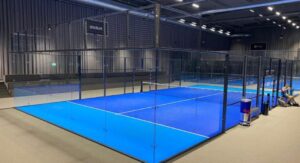
Ein Padelradar ist wie ein stürmischer Käfig. Vier Wände, die sich in Geschwindigkeit, Klang und unnachgiebigem Stolz umarmen. Stahlrahmen. Transparente Paneele. Ein Netz, das den Raum in zwei Hälften teilt. Betritt man den Raum, wird alles klar. Der Ball prallt gegen das Glas. Bei jedem Dreh protestieren die Turnschuhe. Wenn ein einfacher Putt misslingt, stöhnt jemand. Der Platz ist so nah, so lebendig, so intensiv. Diese Enge macht süchtig.

Die Proportionen geben den Ton an. Behält man die reguläre Größe bei, bleiben die Ballwechsel schnell und effizient. Verkleinert man den Platz, herrscht Anarchie. Vergrößert man ihn, ist der Reiz weg. Das Glas ist nicht nur schön anzusehen. Es ist Teil der Strategie. Man schießt den Ball absichtlich dagegen. Man liest ihn falsch und muss die Konsequenzen tragen. Danach verwandelt sich ein Gerangel abrupt in einen sauberen Winner von der Rückwand. Ein Wimpernschlag, und der Punkt ist anders.

Der Belag prägt das Verhalten. Die gängige Methode ist Kunstrasen, der mit einer Sandschicht bedeckt ist. Das dämpft Stöße, verhindert aber keine abrupten Stopps. Die Beinarbeit ist hier entscheidend. Nach Regenfällen ist eine gute Drainage unerlässlich. Niemand möchte während eines Ballwechsels nass werden. Ein guter Padelplatz trocknet schnell und behält seine Griffigkeit. Ein kleiner Ausrutscher kann die Atmosphäre ruinieren.

Die Beleuchtung ist entscheidend für ein gelungenes Spiel. Ungleichmäßiges Licht weckt Misstrauen. Ein hoher Lob kann im grellen Licht untergehen und erst zu spät wieder auftauchen. Ich habe einmal eine Kollegin beobachtet, die kraftlos hin und her schlug, weil die Beleuchtung kurz flackerte. Diffuses Licht hingegen sorgt für ein faires Spiel und lässt Ausreden verschwinden.

Die Konstruktion muss Vertrauen erwecken. Sie wird von stabilen Stahlpfosten getragen. Die Paneele dürfen nicht wie ein loser Zaun im Sturm klappern. Der Platz sollte auch bei Windböen standhalten. Stabilität bedeutet Selbstvertrauen. Jeder Ballabsprung ist für die Spieler spürbar.

Die Umgebung verändert alles. Auf einem Küstenplatz liegt ein Hauch von Salz und Brise in der Luft. In beliebten Gegenden verwandelt sich der Lärm von Verkehr und Gesprächen in eine sanfte Hintergrundmusik. Dachterrassenplätze sind rebellisch, kühn. Auch die Erreichbarkeit spielt eine Rolle. Klare Buchungen. Unkomplizierte Terminplanung. Es gab keine hitzigen Auseinandersetzungen darüber, wer den besten Abendtermin ergattert hat.

Pflege macht den Unterschied. Sand verweht, und die Ausrüstung muss erneuert werden. Glasflächen bekommen Fingerabdrücke. Netze lockern sich. Vernachlässigt man all das, wirkt der Platz schnell heruntergekommen. Kümmert man sich darum, bleiben die Spieler in der Luft hängen, wohin sie ein weiterer Ballwechsel führt,
in ihrem Bestreben, dem Ganzen ein Ende zu setzen.

Der Platz ist mit Soundsystem ausgestattet. Die Anlage ist geschlossen, und jeder Ruf wird verstärkt. „Wechsel!“ „Meins!“ „Aus!“ Die Partner unterhalten sich ständig. Stille ist kein gutes Argument.

Andere Orte bieten Überdachungen. Andere können komplett in Innenräume umziehen, um den Wind abzuwehren. Die Spielplätze sind draußen, und das Wetter spielt eine Rolle. Sie haben die Wahl.

Plätze sind im Freien, und das Wetter spielt eine Rolle. Ein legendärer Padelplatz vereint Form und Seele. Er darf nicht Geduld, sondern Reaktionsvermögen auf die Probe stellen. Er muss präzise Linien und virtuose Volleys belohnen. Selbst wenn man nass, vielleicht staubig und mit einem Lächeln vom Platz geht. Wenn die Leute danach noch da sind und sich die unglaubliche Parade ansehen, hat der Platz Respekt gewonnen.

Storage is not a topic of thought by everyone until it is too late. A spiraling move out of control. One office which had become congested in some quarter last quarter. A garage that you cannot find even a car parked in two years. That is when commercial storage service ceases to be an abstract future undertaking and turns into an urgent issue, which must be solved yesterday.

The biggest error the majority makes is to consider storage as the last resort and not a choice.

Good store services are not the overflow holding pen. They are practical additions of your area, be it your home, your office or generally your operation. Once your surroundings are overloaded then all downstream are affected. Work slows down. Stress creeps up. There are also simple tasks that should not require much time. When the space problem is fixed, a number of other problems will also be resolved unexpectedly.

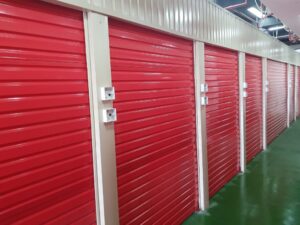
Physical storage has insidiously grown sophisticated. Climate-controlled units deal with sensitive goods, such as artwork, electronics, wine, medical supplies, etc., without a problem. In a similar fashion, security in reputable facilities has also been addressed with gated entry options, unit alarms, and 24-hour cameras. Most of the places are available 24/7, and thus a Friday evening emergency retrieval is not a logistical nightmare on a Saturday evening. The new picture of a dark, dripping warehouse can no longer be sustained.

The greatest risk is on businesses when storage fails. Damaged inventory caused by moisture, lost documents due to a mishap in the facility, equipment that is sitting there and it cannot be used because of a crunch situation, these are not minor losses. They’re expensive ones. Selecting a provider on the price factor is the sort of shortcut that would end up costing much more than it would save. The cheaper and the smarter is hardly the same thing.

The digital storage has turned the tables in terms of information management. Cloud computing systems have eliminated the disorder of the inappropriately placed hard drives, emailed attachments, and rooms of the server that nobody would like to maintain. Documents are stored in a single accessible location, it can be pulled up in any device, and shared without any hassle. A reliable digital storage system has ceased to be a luxury to the teams that are distributed globally, but rather a necessity.

Scalability is an aspect that is worth investing in during the initial stages of decision-making. A bottle-neck in eighteen months would be a solution that fits your present situation perfectly. One should avoid contracts which penalize flexibility or growth.

Ask hard questions prior to committing. Cancellation terms. Insurance coverage. There are any fees lurking in the fine print.

The appropriate storage service is silent in the background. That’s exactly the point.