The pastels are reputed to be easy to use. No hard, no brushes, no water, soft, colorful. Sounds simple, right? Take one and the next thing you know is that you are already elbow deep in magenta dust, looking at a smear of a disaster, wondering what each action that brought you to this point was. Welcome. You’re in the right place. No better way out of that confusion is a basic pastel painting course. You see why your colors are all silted before that error is solidiified by habit. Early reviews such as those transform the whole thing.
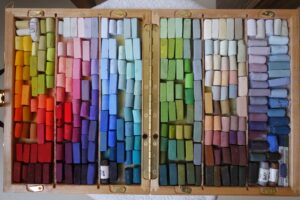
Most people begin with soft pastels, and it is understandable. They intermix so easily, it is almost as though one is dragging colored velvet. The issue that no one brings up initially? Paper. Sketchbook paper every now and then has pastels sliding right away with no grip. You need texture. Sanded paper, pastel boards, coarse watercolor sheets, take any of them and the difference is so instant and nearly shocking.
The beginners are always put to the test by layering trips. The Lights before darks are intuitive. It is totally counterintuitive as well. Dark tones should be put down first, lights built up. Flip it round and your painting drives away as it has a score to settle with you. This is the focus of any course that is worth your time in the initial couple of lessons.
The combination of pastels is a universe on its own. Learn no more about blending paint in a palette. In this case blending is done at the surface itself – fingertips to make soft transitions, a tortillon to make accurate edges, strokes to be laid over to create a textured depth. Three various ways, three entirely different results. The course is organized in such a way that it takes you through each of them to make sure that you are not simply guessing and hoping.
Fixative spray is not as bad as it is being treated. The majority of novices resort to it when they are at the end. Wrong move. Spray in between layers. Any slight slip and even a meticulous painting becomes a smearred mess when one steps over it.
The choice of the subjects is more important than individuals think. Still life and landscapes are in their time, patient teachers, bulky forms, unmistakable shadows, give way to inaccuracy. One book, one piece of fruit, a ceramic mug. These develop your knowledge of light and value without turning them into the pop quiz.
This is what happens with pastels, they are rewarding to the individuals who cease to fight with the dust and lean into it. Filthy fingers, dirty knuckles, a partially pink nose at the end of one of the sessions. That’s not failure. That is how things are expected to work.